Different roles need different entry points into the same system
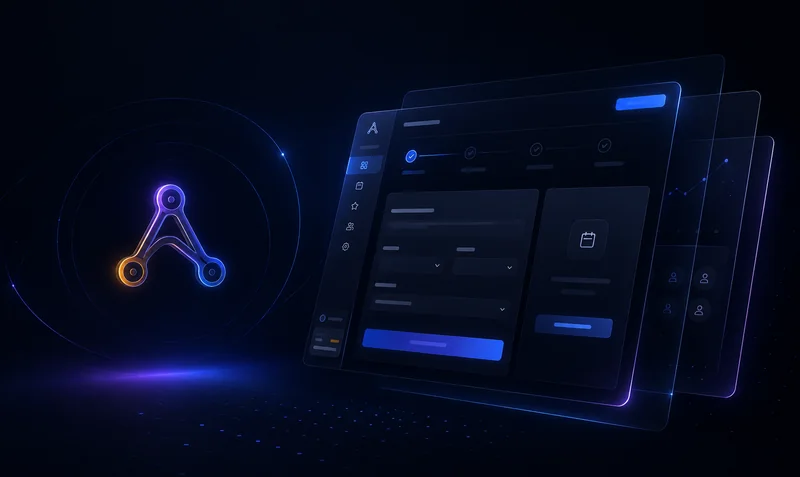
Aligner is publicly presented as a platform for organising and attending systemic constellation sessions. It supports different user situations and account journeys.
The public interface therefore needs to explain the product, distinguish contexts and provide visible paths to registration and sign-in. This case study does not disclose internal role names or claim commercial success.
The architecture separates public explanation, account entry and work within the product.
01
Registration is a primary action
Registration and sign-in are primary product actions, not peripheral utilities.
Why it matteredThe user understands where their own platform journey begins.
02
Explain different contexts
Public communication distinguishes needs without publishing internal role names.
Why it matteredVisitors can identify with a relevant scenario while the sensitive structure remains protected.
03
Trust belongs in the architecture
Legal and privacy information forms part of product trust rather than an afterthought.
Why it matteredAccess conditions and account use must be clear before action.
Platform anatomy
The platform starts by recognising the user’s situation
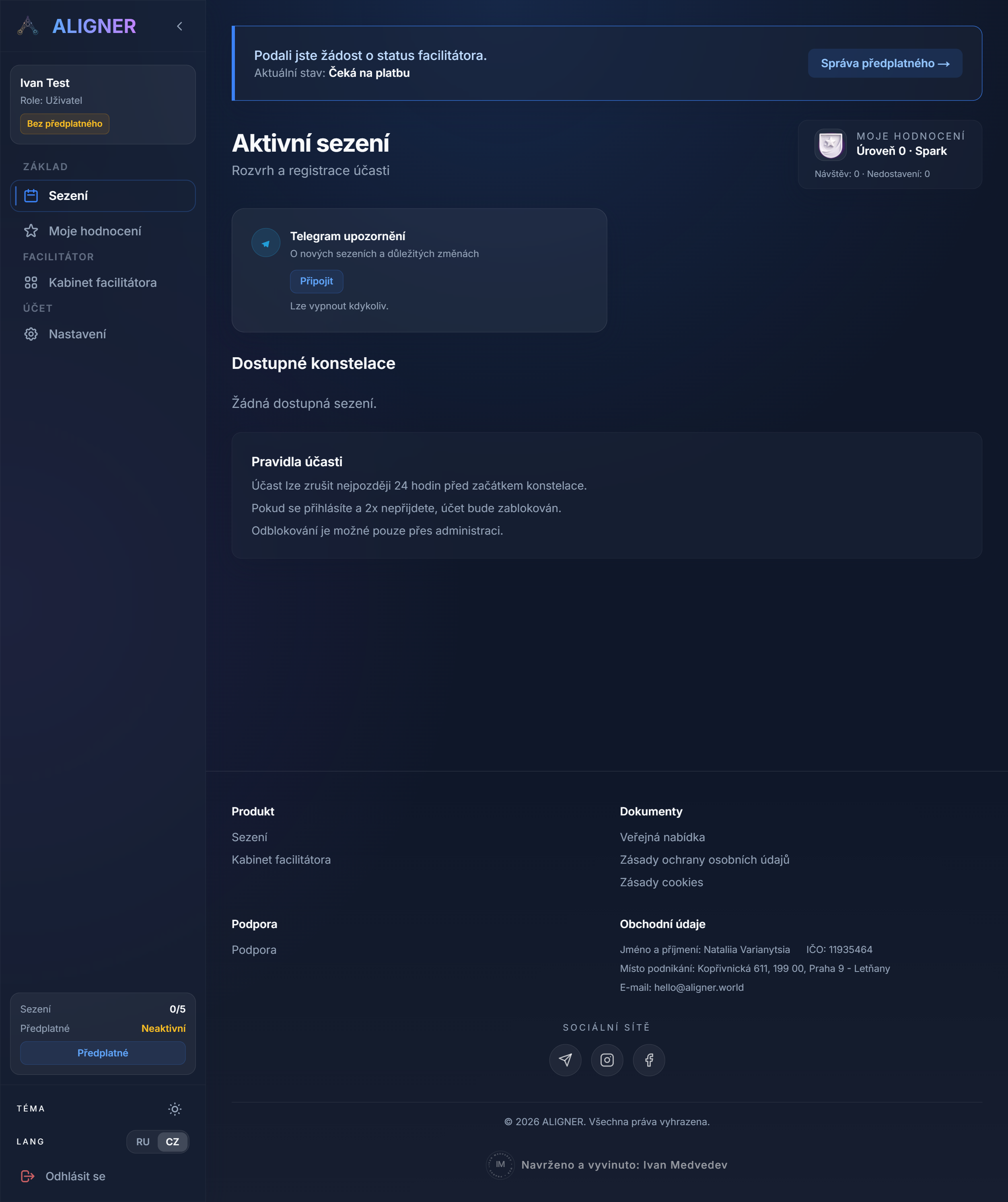
The public layer explains the product and leads to registration or sign-in. Further features become available according to the account and purchased scope.
Visitor
The user first identifies the path that matches their situation.
Registration or sign-in
Primary product actions lead to an account rather than a generic contact form.
Account
Access conditions determine which part of the platform is available.
Sessions
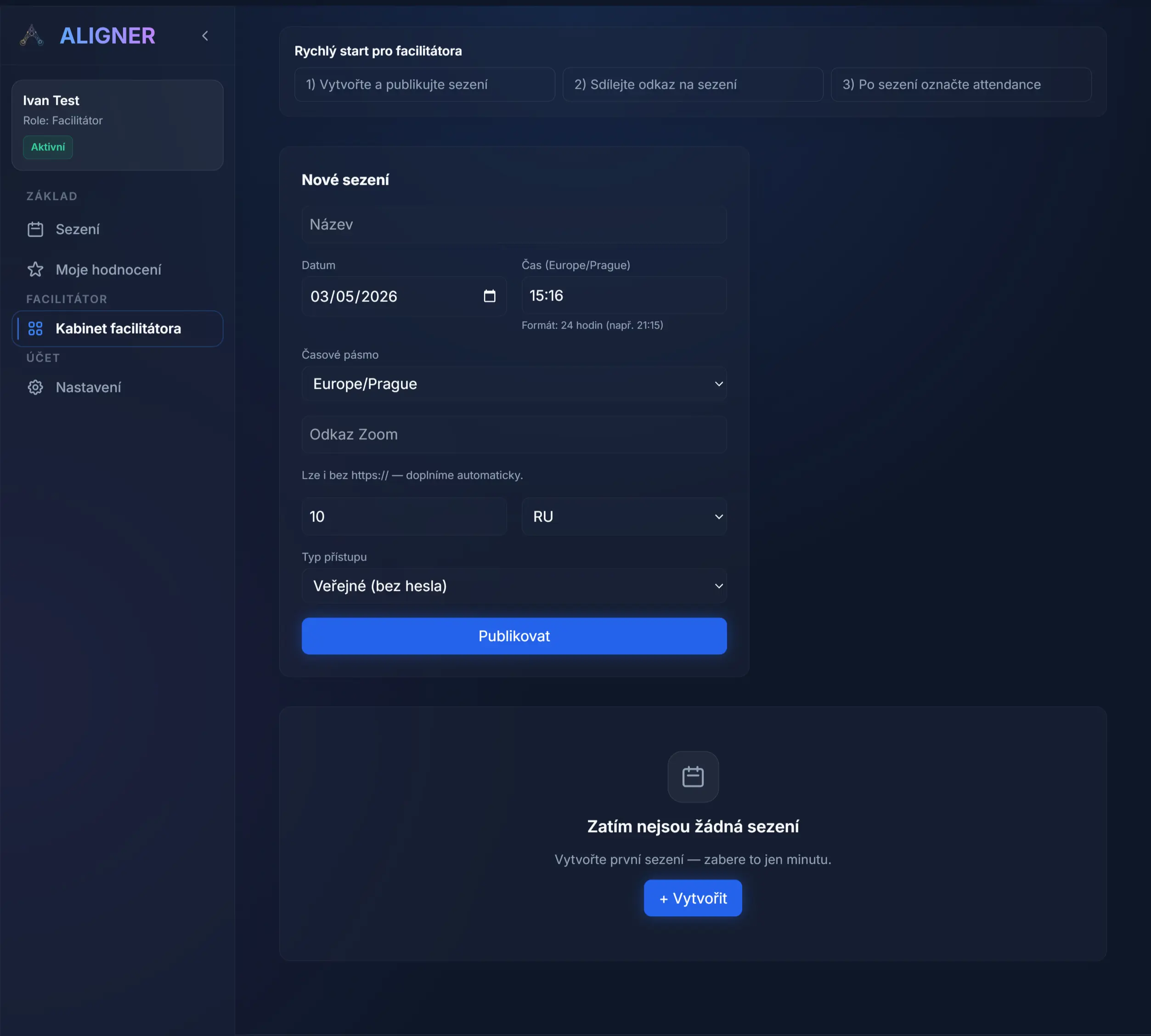
The user continues to session work and related tasks.
Extended access
Packages and subscriptions extend the available scope without exposing internal role names.
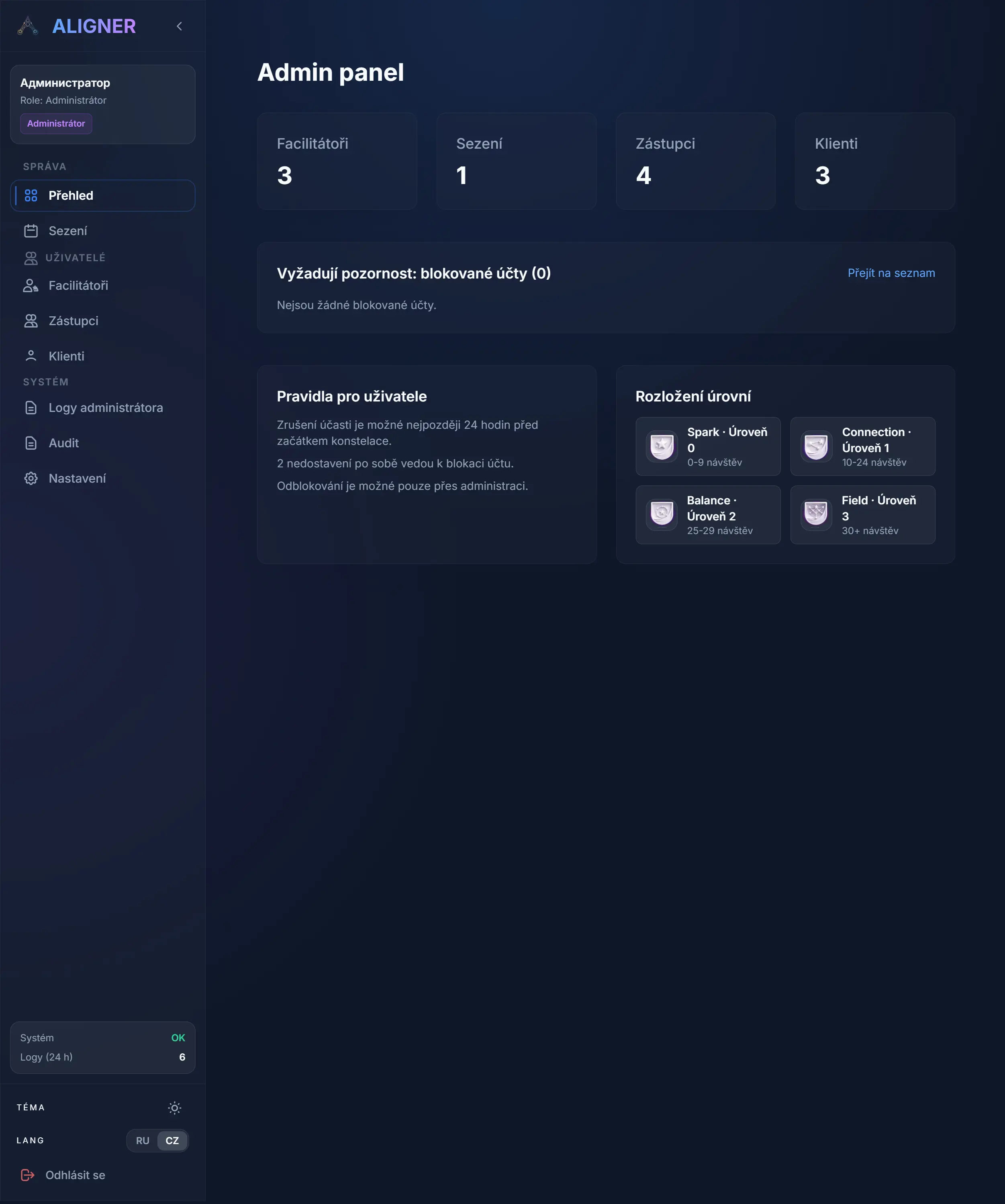
Internal role names remain confidential. Account screens are published only with safe data and after the current state has been verified.
The complete outcome
Aligner shows how public product explanation continues through registration and an account into a platform with differentiated access, sessions and payment scope.
Registration and sign-in are part of the primary product journey.
Different contexts can be explained without revealing internal role names.
The case study documents product scope, not commercial success.
Are you planning a platform, registration or account system?
A complex project starts by clarifying roles, data, integrations and support.